Telehealth-enabled operational redesign for emergency care
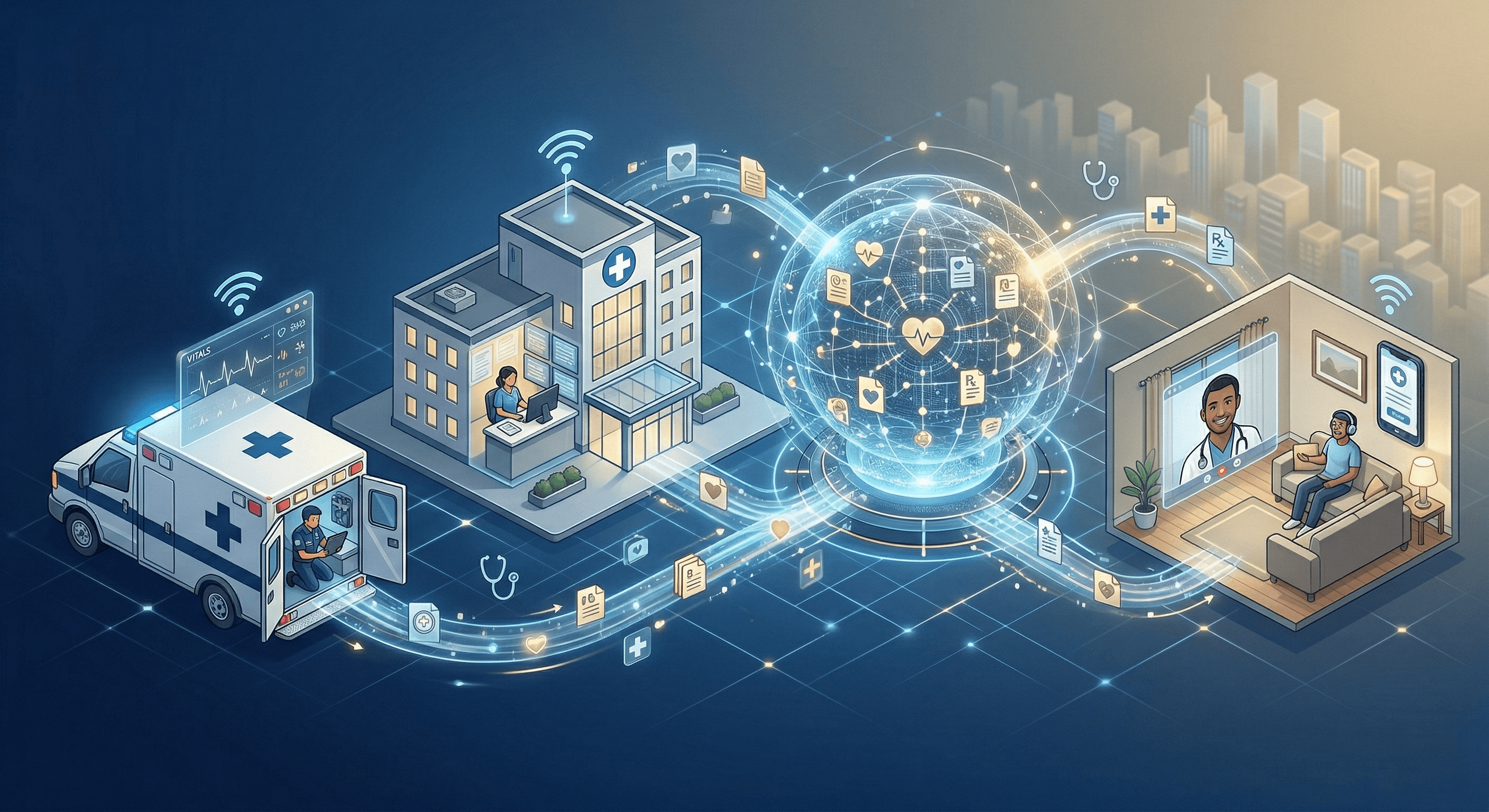
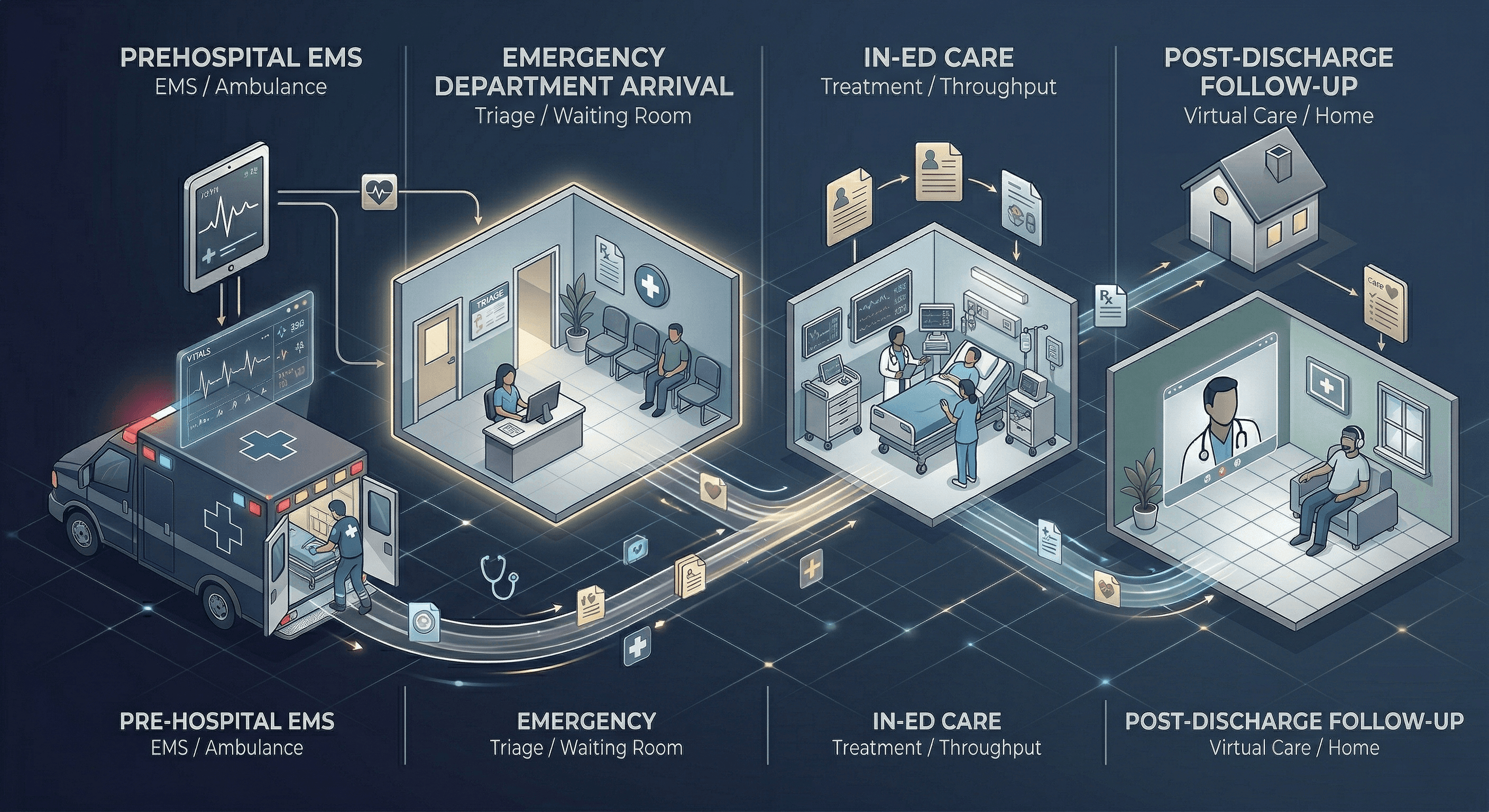
We help health systems redesign emergency care flow using physician-led virtual care models across the continuum: from prehospital triage to ED arrival, in-ED throughput, and post-discharge follow-up.
85%
Fewer walkouts
35–50% Faster care
7%+ Revenue lift
Scalable models
Data-driven outcomes
Clinical focus
Operational impact
For all health systems
The Challenge
Patients are leaving before care starts. Capacity is being lost before the first provider touch.
Long waits become walkouts
Delayed provider contact slows every downstream step
Front-end friction directly affects revenue, experience, and safety risk
ETS helps redesign that front door by moving care earlier, reducing delay, and recovering value with telehealth-enabled clinical workflows.

Flow
Front-door congestion
Delayed time to provider
Walkouts & leakage
Throughput
Low-acuity bottlenecks
Inconsistent patient experience
System
Inefficient EMS routing
Fragmented follow-up
Underutilized virtual care infrastructure
Virtual Provider in Triage (VPIT)
Reengineering the ED front door
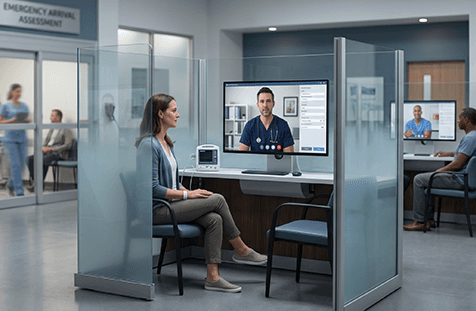
Virtual Provider in Triage (VPIT) places a licensed provider at the front of the ED arrival using telehealth. Instead of waiting to be roomed, patients get an early exam, orders, and decisions within minutes.
The result is simple: the waiting room becomes an active clinical zone, not a passive queue.
“VPIT is not telehealth software. It’s a front-door redesign of emergency care delivery.”
J. Danny Park MD FACEP
ETHAN
VPIT
Virtual Fast Track
Virtual Follow-Up
Telehealth-enabled models across emergency care
ETS helps health systems move emergency expertise to the points where delays begin:
Prehospital triage and EMS navigation
Virtual Provider in Triage
Virtual Fast Track for low-acuity throughput
Virtual Follow-Up after ED discharge
Reduce unnecessary ED arrivals
Accelerate throughput
Improve patient flow
Care model integration
Why health systems engage ETS
ETS brings emergency physicians who understand the workflow, staffing, EHR, billing, and operational reality.
Operational Impact
Financial Impact
Experience Impact
Workflow redesign
EHR and documentation logic
Shorter time to provider
Earlier workup
Reduced bottlenecks
Staffing model discipline
Reduced leakage
Revenue recapture
Increased capacity
Reimbursement optimization
Governance alignment
Earlier contact
Less passive waiting
Better continuity
Performance metrics executives can track
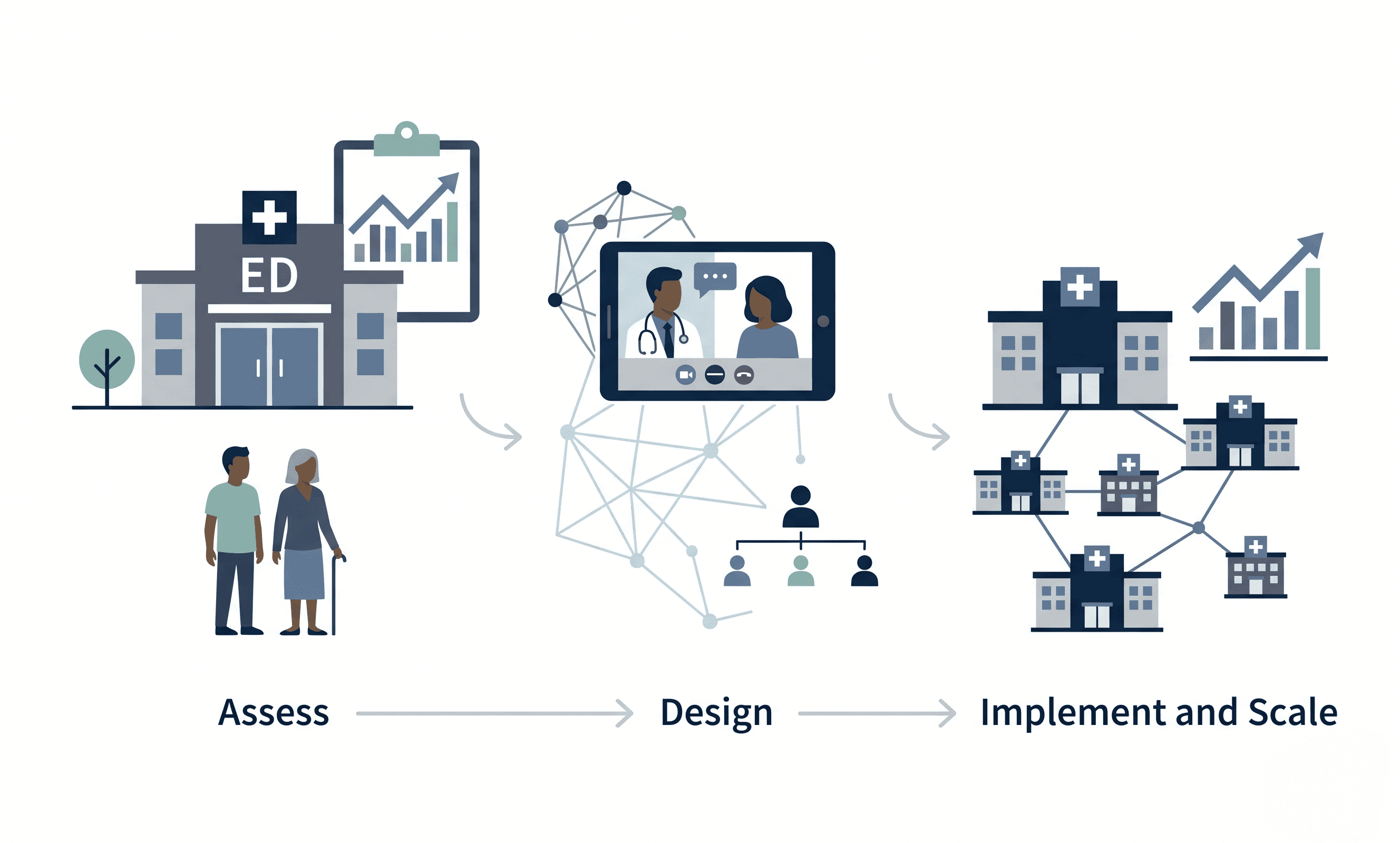
How ETS works
ETS works with health systems to design, implement, and optimize telehealth-enabled emergency models. We help translate strategy into operational workflows—not just concepts.
Step 1: Assess - front-door flow, leakage, staffing, throughput. Step 2: Design - workflow, inclusion, staffing, escalation, KPIs.
Step 3: Implement - pilot launch, optimization, scale-up.
Ideal for health systems seeking practical implementation—not generic telehealth consulting.
About ETS
Built by emergency physicians who understand the operational realities of frontline care, ETS was founded by physicians who designed and implemented telehealth-driven ED workflows. Our work is grounded in clinical operations, not abstract innovation language.
We focus on models that improve flow, expand access, reduce waste, and create measurable value for health systems.

J. Danny Park, MD FACEP